.jpeg)
Welcome to Stone Town — Zanzibar’s Historic Heart
Experience Type: Cultural heritage, walking tours
Best Season: Year-round
Guest Appeal: History lovers, culture seekers, and cruise passengers
Location and Context
.jpeg)
Stone Town is the historic heart of Zanzibar City, located on the western coast of Unguja, the main island of the Zanzibar archipelago. This vibrant town fronts a natural harbor that has served as a hub of Indian Ocean trade for centuries. Its compact, walkable layout makes it easily accessible from the airport and ferry terminal. In 2000, UNESCO recognized Stone Town as a World Heritage Site for its outstanding cultural significance and unique architectural blend of Swahili, Arab, Persian, Indian, and European influences.
Key Features
.png)
- Historic Monuments: Discover the House of Wonders, Old Fort, Sultan’s Palaces, and Anglican Cathedral—each a testament to Zanzibar’s rich history.
.png)
- Markets and Commerce: Experience the vibrant atmosphere of Darajani Market, the bustling center of daily life, where spices, fish, textiles, and crafts abound.
.jpeg)
- Rooftop Terraces: Enjoy panoramic views of the harbor from many buildings, perfect for sunsets and evenings filled with taarab music.
.jpeg)
- Living Heritage: Stone Town is a vibrant city where families, artisans, and traders continue to uphold their traditions, making it a living museum.
- Coral‑stone architecture: Buildings constructed from coral rag and lime mortar give Stone Town its distinctive pale walls and textured surfaces.
- Carved wooden doors: Hundreds of ornate doors, each with unique motifs, are iconic symbols of wealth and artistry.
- Labyrinthine alleys: Narrow, winding streets form a maze that opens onto small squares, mosques, and markets.
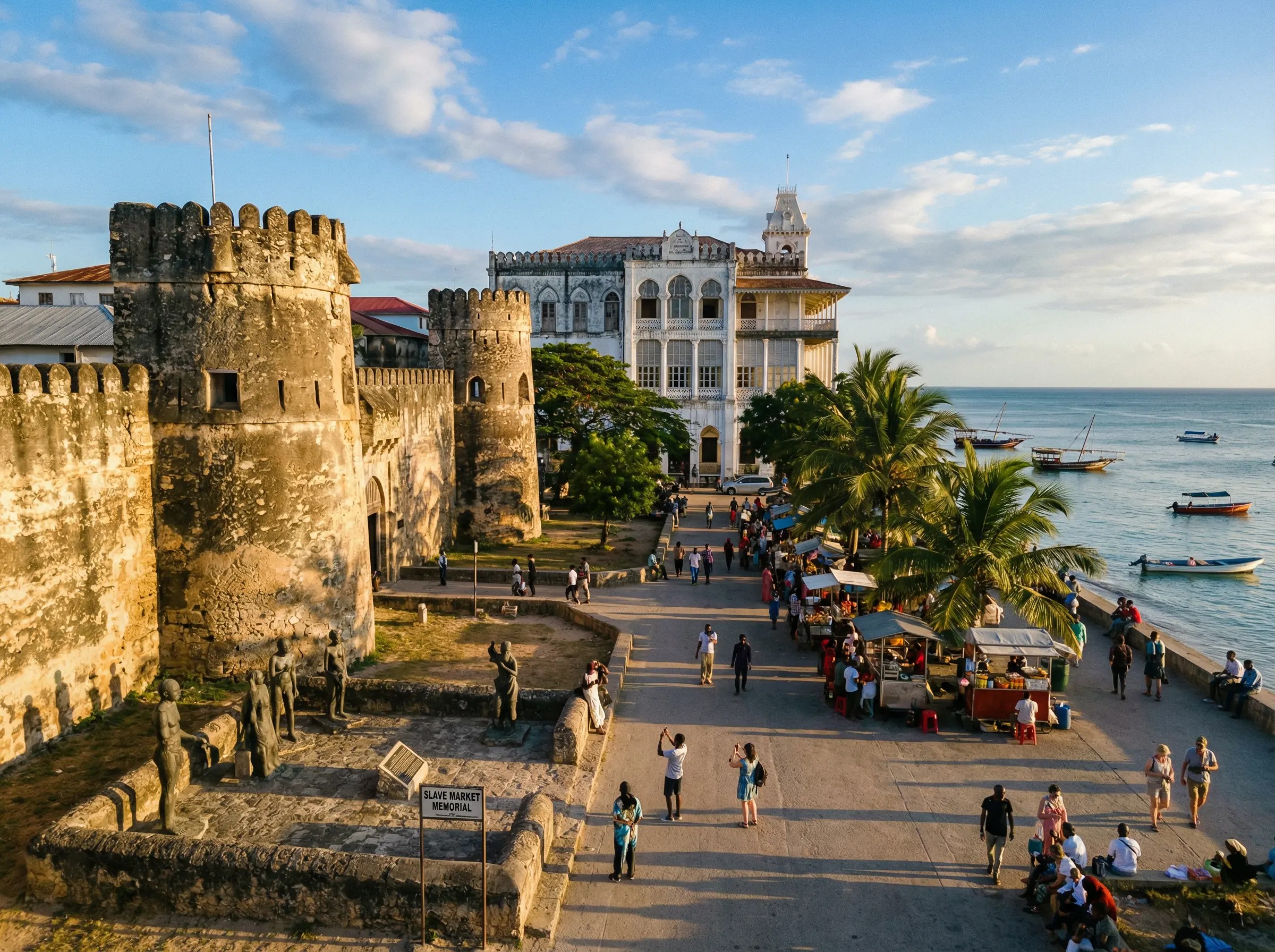
- Historic monuments: The House of Wonders, Old Fort, Sultan’s Palaces, and Anglican Cathedral are major landmarks.
- Markets and commerce: Darajani Market is the bustling centre of daily life, selling spices, fish, textiles, and crafts.
- Cultural layering: Mosques, churches, and temples coexist, reflecting centuries of multicultural exchange.
- Rooftop terraces: Many buildings offer panoramic views of the harbour, perfect for sunsets and taarab music evenings.
- Living heritage: Stone Town is not a museum but a living city, where families, artisans, and traders continue traditions.
Why Visit Stone Town
.jpeg)
Stone Town is the cultural soul of Zanzibar, inviting visitors to immerse themselves in its rich history, stunning architecture, and vibrant daily life. This unique setting provides an authentic experience, allowing guests to understand Zanzibar’s pivotal role in the Indian Ocean trade network and the cultural fusion that shaped Swahili identity. Here’s what you can expect:
- Immersion in history: Walking tours reveal centuries of trade, colonialism, and cultural fusion.
- Sensory experiences: The aroma of spices, the sound of taarab music, and the sight of carved doors create lasting impressions.
- Photographic appeal: Narrow alleys, colourful markets, and harbour sunsets are highly photogenic.
- Accessibility: Easily explored in half a day or a full day, with options to combine with spice tours or boat trips.
- Upsell potential: Private guides, rooftop dinners, and dhow cruises add premium value to packages.
Expanded Details (Deep Dive)
.jpeg)
History and Heritage
Stone Town’s history stretches back over a thousand years. It became a major trading hub in the 19th century under Omani rule, when Zanzibar was the world’s leading exporter of cloves. The town was also a centre of the slave trade, with markets and holding cells that can still be visited today. British colonial influence followed, leaving behind administrative buildings and churches. This layered history is visible in the architecture and urban fabric.
Architecture and Urban Fabric
The town’s architecture is a blend of Swahili coastal design and imported influences. Coral stone houses with wooden balconies line narrow alleys. The famous carved doors often feature geometric patterns, floral motifs, or inscriptions, reflecting the wealth of merchant families. The layout of the town, with its maze of alleys, was designed to provide shade and ventilation, making it comfortable even in hot weather.
Major Landmarks
.jpeg)
- House of Wonders (Beit el‑Ajaib): Once a sultan’s palace, now a museum showcasing Swahili culture.
- Old Fort (Ngome Kongwe): Built by the Omanis in the 17th century, now hosting cultural events and shops.
- Anglican Cathedral of Christ Church: Built on the site of the former slave market, with poignant memorials.
- Palace Museum (Beit el‑Sahel): Former residence of the sultans, displaying royal artifacts.
- Freddie Mercury House: Birthplace of the Queen frontman, now a popular stop for fans.
Markets and Daily Life
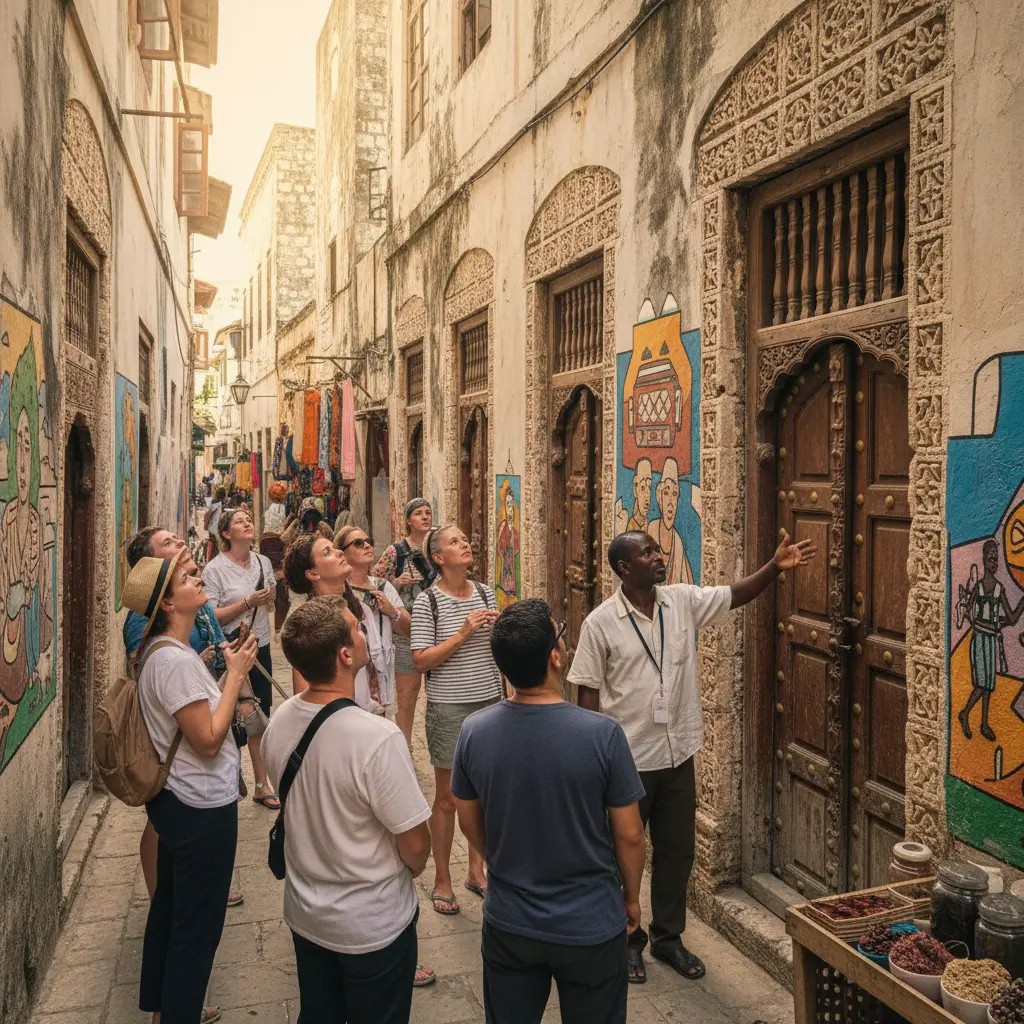
Darajani Market is the beating heart of Stone Town. Visitors can see fish auctions, spice stalls, and textile vendors. The market is noisy, colourful, and full of energy. It offers a chance to interact with locals and buy authentic products. Street food stalls serve dishes like urojo (Zanzibar mix), pilau, and fresh sugarcane juice.
Cultural Experiences

Stone Town is a centre of Swahili culture. Visitors can attend taarab music performances, visit art galleries, and explore craft workshops. The town also hosts festivals, such as the Zanzibar International Film Festival (ZIFF), which brings global attention to local arts.
Rooftop Sunsets and Dining

One of the highlights of Stone Town is watching the sunset from a rooftop terrace. Restaurants and hotels offer panoramic views of the harbour, with dhows sailing across the horizon. Dining experiences often include Swahili cuisine, seafood, and live music.
Why It Appeals to Different Guests
- History lovers: Rich heritage, museums, and monuments.
- Culture seekers: Music, art, and daily life in a living city.
- Cruise passengers: Compact layout allows for half‑day tours.
- Photographers: Endless opportunities for unique shots.
- Families: Safe, walkable, and educational.
Practical Information
- Duration: Explore Stone Town in half a day (3–4 hours) or enjoy a full day that includes museums and meals.
- Best Time: Year-round; mornings and late afternoons are the most pleasant for exploration.
- Accessibility: While narrow alleys may pose challenges for wheelchairs, comfortable shoes are highly recommended for walking.
- Etiquette: Dress modestly, always ask before photographing individuals, and show respect at religious sites.
Conclusion
Stone Town is the gateway to Zanzibar’s soul. It offers a unique blend of history, culture, and daily life in a compact, walkable setting. For travellers, it is both an educational and sensory experience, making it a must‑visit attraction. Whether exploring monuments, tasting street food, or watching a rooftop sunset, visitors leave with a deeper understanding of Zanzibar’s identity and heritage.
← Back to Home